
Filter Coffee #257
On Calling-Out & Calling-In

Bangalore
Number Bummer, aka Blunder in Bandra: Dear readers, I wrongly numbered the previous edition 258 instead of 257. So, here I am, posting FC 257, and I hope you like it. I received some nice comments on ‘Banter From Bandra’. Sharing them here:
Subahu Desai: “Bandra has a lot of fond memories. Our family owned Neptune cinema opp. Bandra station and New talkies on Hill Road next to the Bandra post office. Linking Road was my favourite haunt. Gazebo restaurant, owned by Sehgal’s Kings Shoes. Bada Saab tailors owners were dear friends. My uncle’s home was at Marina Apartments next to Bai Avabai Petite girls school, other occupants were Raj Khosla Tahir Hussain (Aamir Khan’s father. Aamir still lives there). Eating frankie rolls, chaat and Chinese food on pushcarts by the roadside. Thanks, Pras for reviving old memories.”
Lakshmi Raman: “I enjoyed this 'this and that' FC of yours today. Got to it late-morning as I did yoga as usual in the early morning, had tea and then, unusually, went back to bed and slept till 11 am. And I have not had a hectic week. So, I can well understand your fatigue after being on the lam for almost the whole of the week. From what you shared, a fitness routine nowadays seems to be a mix of fitness work (walk in the park, gym), business talk and catching up with friends and breakfast out. A far cry from the akharas and workouts of older times. But definitely more interesting.”
💬 Calling-Out & Calling-In
Way back in the 60s, we lived in Mysore on a street that had many houses. It was like living in an ungated community when compared with the present-day gated communities that have robust security systems. These ungated communities, all over, were frequently the targets for thieves. A locked house was an open invitation to them, and it unlocked opportunities to steal.
There was no system of security guards. Wealthy people hired watchmen, as they were called then, who also doubled up as gardeners. Over time, there was an influx of Gorkha security guards from Nepal. Half of them called themselves Kancha and offered their services for Rs 2 a month. Surprised? I looked it up on the currency calculator. It is equivalent to Rs 187/- today!!
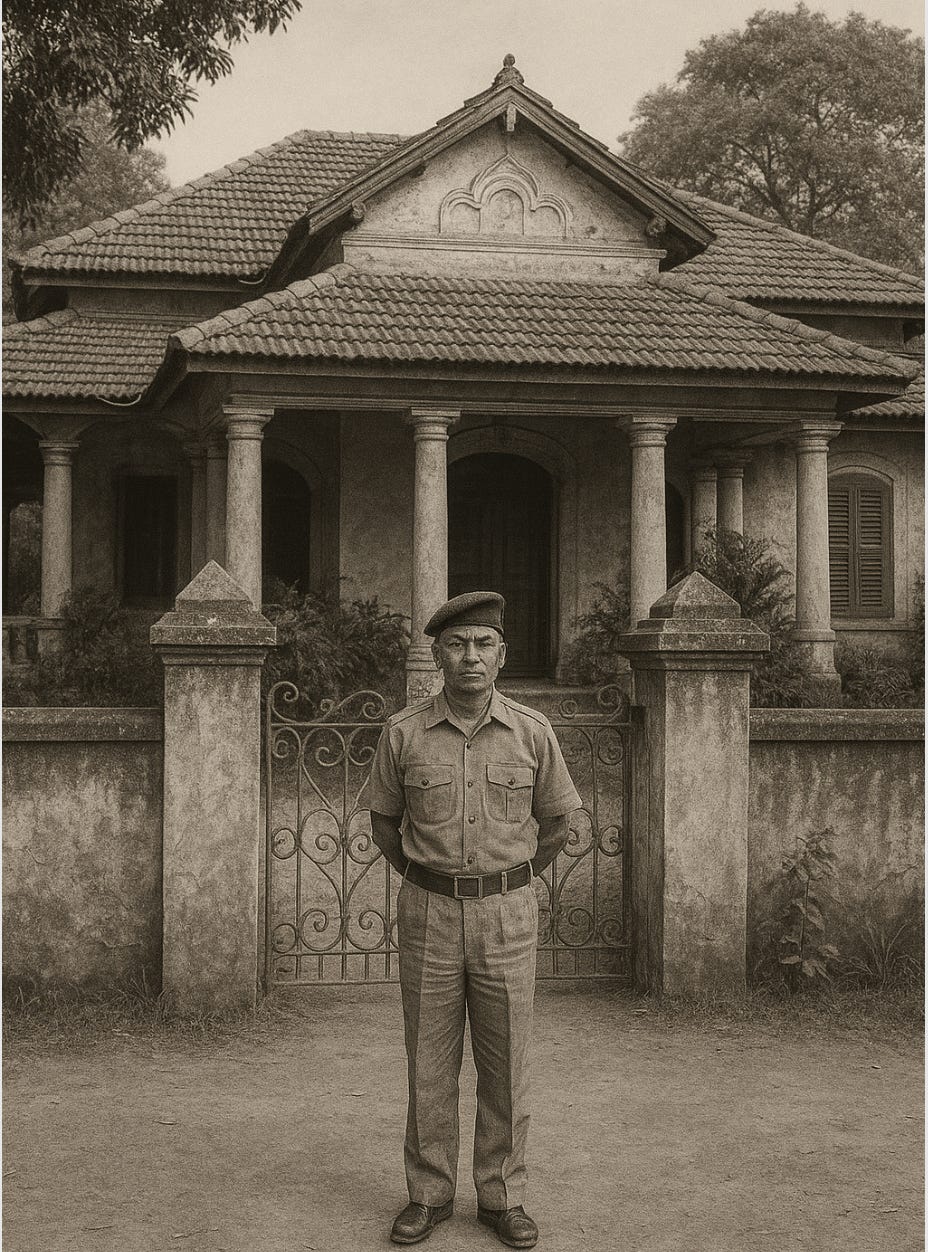
The Kanchas would mark territories like a tiger and make sure there’s no infiltration by other Kanchas. One such Kancha took charge of our street. Around midnight, he would patrol the street, knocking on the road with a stick and blowing the whistle at measured intervals. The utterance of vernacular equivalents of “Beware” was also said aloud. My first exposure to the Hindi word Hoshiyar! If it was meant to keep burglars at bay, it succeeded for most of the time. This, perhaps, was the early use of the phrasal verb ‘Call-Out’.
I also remember the times when some epidemic broke out, the municipal authorities would mount a loudspeaker on a van and alert people and request them to drink boiled water and take other precautions. On a happy occasion of the birth of a child in the Mysore Palace, from the gun-house, 21 gun salutes were given. Calling out the news of the new arrival. That reminds me of a line in the ‘Insults Book’ about a prince who was a tyrant. It read “when he was born, 21 guns were fired, too bad all missed him”.
The phrase ‘call out’ is a commonly used idiom in English that has its roots in historical contexts. The origins of this phrase can be traced back to ancient times when people would use loud calls or shouts to signal for help, alert others to danger, or summon someone. This practice was prevalent in various cultures and societies around the world.

In modern times, the phrasal verb ‘call-out’ has taken on new meanings beyond its original context. It now refers to speaking up against injustice or unacceptable behaviour. For example, if someone is misrepresenting facts or giving misleading information, one may choose to ‘call it out’ by confronting that person. This expression does not mean simply calling someone or something out loud. It also means exposing someone for their actions or behaviour.
Before one resorts to calling out, one could try ‘calling-in’. While calling out is an instant and open reaction, ‘calling in’ is when people want to discreetly inform someone that what they’ve said or done is problematic, harmful and is not right. In a conversation among a few people, one of them may say something that hurts the feelings of another person in the group, who may be either too shocked to retort or decide not to exacerbate the matter in a group setting. He may decide to call in and give that person an opportunity to express his regrets or make amends.
Not all situations are conducive to ‘calling-in’. Some of them take a turn for the worse, compelling someone to ‘call-out’. I have been in situations when insults have been traded, and a person, whom both parties hold in high regard, pulls them up and gets the order restored. One wonders if the person ‘calling-out’ should be of some standing or someone who commands respect or has some authority.
A righteous approach, belief and respect can prompt someone to ‘call-out’ if what is said or done is unacceptable. A mother can pull up her kid for showing disrespect to the house help.
Some mothers may shrug it off, but then the kid will never know what the dignity of labour and the dignity of a person are. Calling-out at such times is beneficial. It helps the kid to respect the person and makes that person feel respected.
As a very young lawyer, I was quite aggressive and, in hindsight, overconfident too. I had the opportunity to appear in a matter where the other side was represented by an elderly lawyer.
I thought a display of aggression would please my client and began to interrupt the lawyer, and at one stage, I doubted his preparedness to conduct the case.
After the matter was adjourned for further hearing at that lawyer's request, I returned to the Bar Association feeling pleased as a punch with myself and my client in tow, appreciating the way ‘I gave it to the other side’. As I returned from the washroom, I was met by the Dafedar (Security Guard assigned to a judge), who told me that the Judge would like to see me in his Chambers.
Wondering why that might be, I walked in, and the judge asked me to sit, and as if on cue, the Dafedar walked in with two cups of coffee. The Judge offered one to me, and by now, I was squirming, not knowing why I was being given this treatment. The clatter of the cup and saucer betrayed my trepidations.
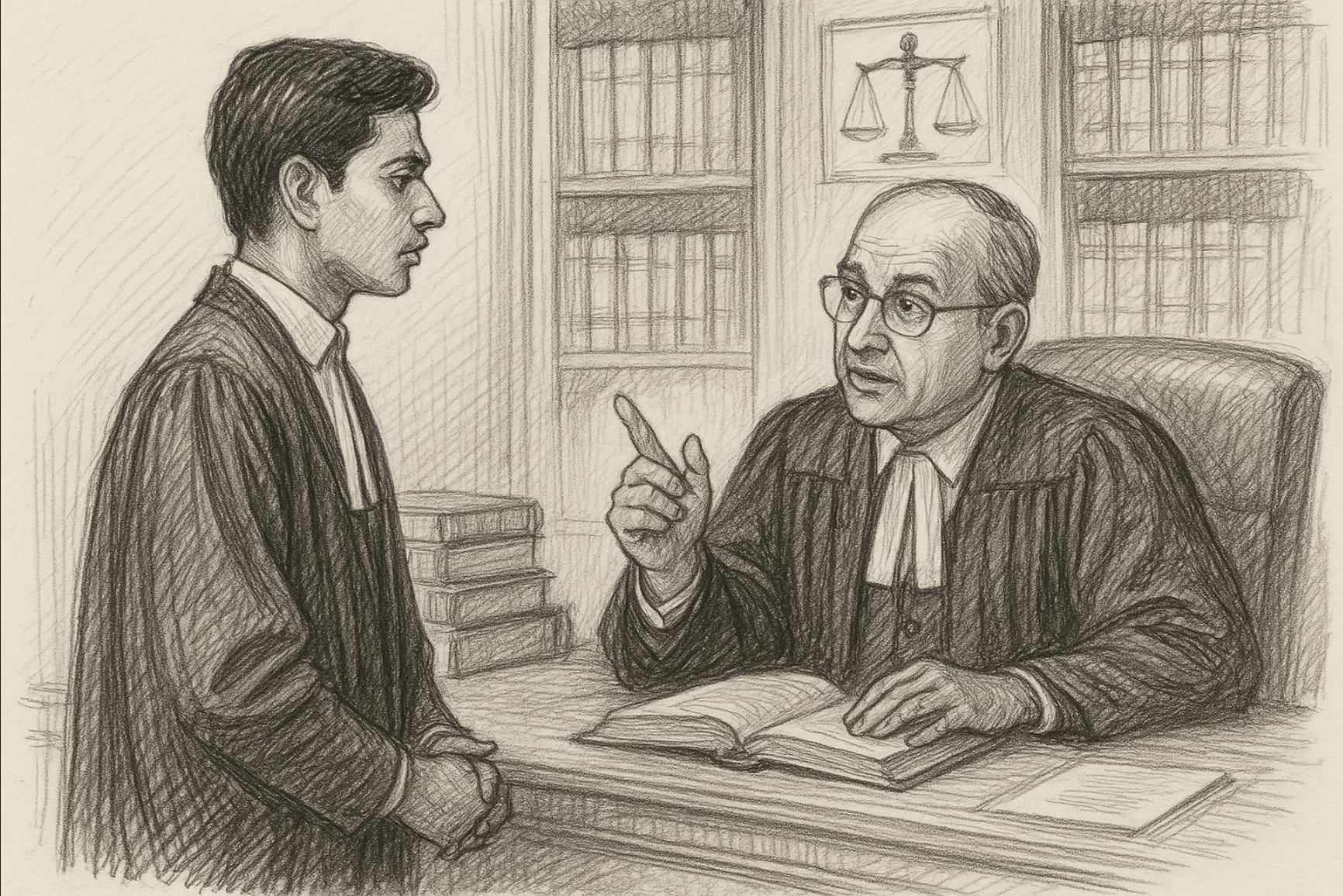
Putting his cup down, the Judge looked at me and smiled. He then went on to soft-land on me the meaning of advocacy, dignity of the courtroom, professional ethics, courteous behaviour towards seniors and above all humility that hides the brilliance in a person. Looking back, as I write this post, I realise that the Judge set the best example of ‘calling-in’. I also realise I called-out, unjustly, that the elderly lawyer had not prepared well, which he may have dismissed as an outburst of youthful exuberance. I never thereafter displayed any arrogant behaviour, and over time, I got the respect that I earned. A few years later, it was the same judge who appreciated my advocacy skills and tried to dissuade me from leaving the Bar and going corporate.
“Is that the way you talk to your elders?” was the much-heard call-out in those days. I’m not sure if it is so now, where respecting elders is seen as an imposition. “Mind your language” is a familiar call-out that we hear in situations where conversation turns abusive. Threatening to ‘call-out’ can be used to subjugate someone. If a person has done something wrong in the past, it can be used against her with a ‘call-out’ threat! It’s best to avoid calling out to embarrass someone or to put the blame on someone. It may be more appropriate to use the call-in method and have a private conversation.
There might be an occasion when you may have to ‘call-out’ to vindicate yourself. If you are being unjustly accused of or being held responsible by your superior for something which you did not do, you are well within your rights to call your boss out, but it must be done in a manner that does not belittle him or is detrimental to you. Tough ask.
Let me end this with a real-life anecdote. My younger cousin was not very good at arithmetic (nor was I, for that matter), and when he was in the 5th standard, he was being unjustly compared with others who had a penchant for numbers. During one of the discussions, an elder commented, or shall we say called-out, in my cousin’s presence, that he had scored 38 marks and had just scraped through. My cute little cousin (as he then was) called the elder out by saying, “That’s not true, I scored only 36!”.
Dear Readers. Hope you liked this post. Don’t hesitate to call me out if something was not to your liking or expectation. Until next week, take care and be safe. Ciao!
Good morning and thank you Prasanna for this reflective piece on 'calling out.' In eastern cultures such as ours, where saving face is so vital to social coherence, 'calling out' is mostly deemed as uncouth. 'Calling in' is practiced more in order to get wrongs righted and to give a gentle snub to the offender without making them lose face in public.
And I loved your bringing your personal experience. They zing up your FCs and make them so very readable with that first cuppa in the morning. Have a good Sunday.