
Filter Coffee # 296
Guest Edition - On The Return of Rituals

Tashkent
As I fly to Tashkent, I thank you all for commenting on ‘Sojourn’. I forgot to include an interesting comment that my wife, Geetha, made. Here it is:
“The UK introduced the Window Tax in 1696, to be paid based on the number of windows in a home, thus effectively taxing sunlight. To minimise tax liabilities, property owners bricked up the windows, and by closing them down, they effectively cut off sunlight. This led to health and mental health issues due to reduced light and ventilation. This tax was abolished in 1851.”
On FC 295, Lakshmi Raman commented:
“I love journeys, and my sojourns have been happy and enjoyable ones when I have travelled abroad. But the best ones were at my grandmother’s in the village. Unforgettable. I like the way you made the transition from sojourns outside to those within us. I also love this quote by Martin Buber, which, though not directly related to sojourns, came to mind: ‘All journeys have secret destinations of which the traveller is unaware.’ Enjoy your sojourn in Uzbekistan, Prasanna.”
Dear Readers, as foreshadowed, this is a guest post authored by Marisha Desai, writer & creative strategist for companies like Myntra & Holiday IQ. She is a keen student of aromatherapy. Her work sits at the intersection of modern living, ancient rituals and mindful living. You can find her on Instagram at @afterglow_apothecary. Her post will be about how old-school self-care practices have found a new generation.
So please read all about:
The Return of Ritual
by Marisha Desai
Modern living comes with its own special brand of exhaustion. Call it burnout, digital overstimulation, or the need to be present, stay ahead, and always, always be ‘woke’! And no, it has nothing to do with physical effort; it’s a low-grade depletion that snowballs quietly, over late nights doom-scrolling paired with ‘slow-living’ morning posts, until one day you find yourself in a pharmacy, staring at a shelf of supplements, wondering how it came to this.
So obviously now more than ever, we are reaching, almost instinctively, for something more ancient, raw, wiser, cathartic.
The return to ritual, to oils, to botanicals, to the intentional, sensory language of nature-based self-care is one of the most significant shifts of our time. It is not a trend in the fleeting sense. It’s the return to who we truly are.
The Long Memory of Oils
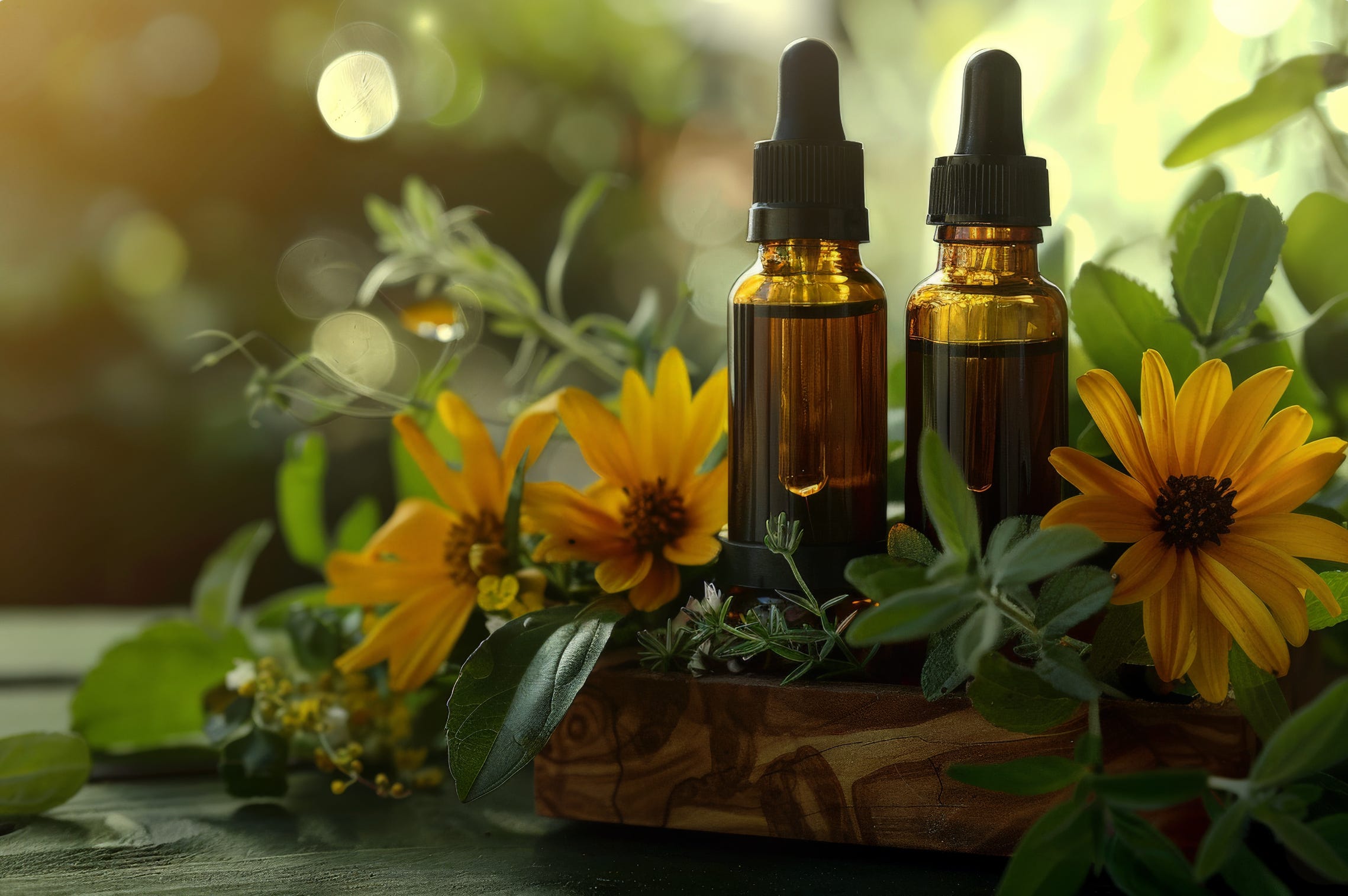
Long before the language of wellness existed (you know: green this, mindful that, longevity propaganda, and so on), oil was serious business. On a recent trip to Egypt, I learned that scented oils were so prized that they were buried with pharaohs, considered necessary provisions for the afterlife. Kyphi, a complex resinous blend of myrrh, juniper, and calamus among other botanicals, was burned in temples and used medicinally, its recipe recorded on papyrus with the same gravity as legal contracts.
In Ayurveda, oil is not a luxury. It is a cornerstone. Abhyanga, the practice of warm oil self-massage, is prescribed not merely for physical benefit but as an act of self-regard, a daily ritual of telling the body it is worth attending to. The oils used were chosen with precision: sesame for its warming, grounding properties; coconut for its cooling lightness; infusions of ashwagandha, brahmi, and shatavari for their deeper, more specific actions on the nervous system.
In the ancient Mediterranean, olive oil was currency, medicine, and devotion. The Greeks anointed athletes before competition and the dead before burial. The Romans scented their baths with imported Syrian oils at considerable expense. Across the Arab world, the tradition of attars, concentrated botanical perfumes in an oil base, developed into an extraordinarily sophisticated art form, one that predated and arguably outpaced European perfumery for centuries.
What runs through all of these traditions is not mysticism. It is attention. A culture of paying close, careful notice to the body, to the plant world, and to the relationship between them.
So, let’s bring oils back! The twentieth century was not kind to this kind of living. The rise of modern medicine, genuinely miraculous in so many ways, brought with it a cultural devaluation of anything that could not be tested in a double-blind trial. Plant-based practice was reframed as folklore. Ritual was dismissed as superstition. The body became a problem to be solved rather than a being to be tended.
We might have gained precision, but we lost a meaningful relationship.
The current return to oils and botanical self-care is, in part, a renegotiation of that loss. Burnout culture has made the limits of productivity-first living impossible to ignore. The pandemic, for all its devastation, forced a particular kind of stillness, and in that stillness, many people rediscovered that the body responds to sensory care in ways that are difficult to quantify but impossible to dismiss.
The Ritual Itself Is the Point
What is easy to miss in the world of aromatherapy and botanical oils is that the active ingredient is not merely the plant compound. It is the act.
Warming the oil, working it into the skin with long, deliberate strokes, sitting with it before washing, the whole practice asks you to be present in your body in a way that contemporary life rarely permits. Ancient perfumers who spent hours distilling rose petals into attar were engaged in a form of meditation as much as manufacture. Recipes required weeks of preparation. Sun-infusion, for instance, moves away from the hurried practices of applied heat and distillation, giving us a luxurious, beautiful macerated botanical oil.
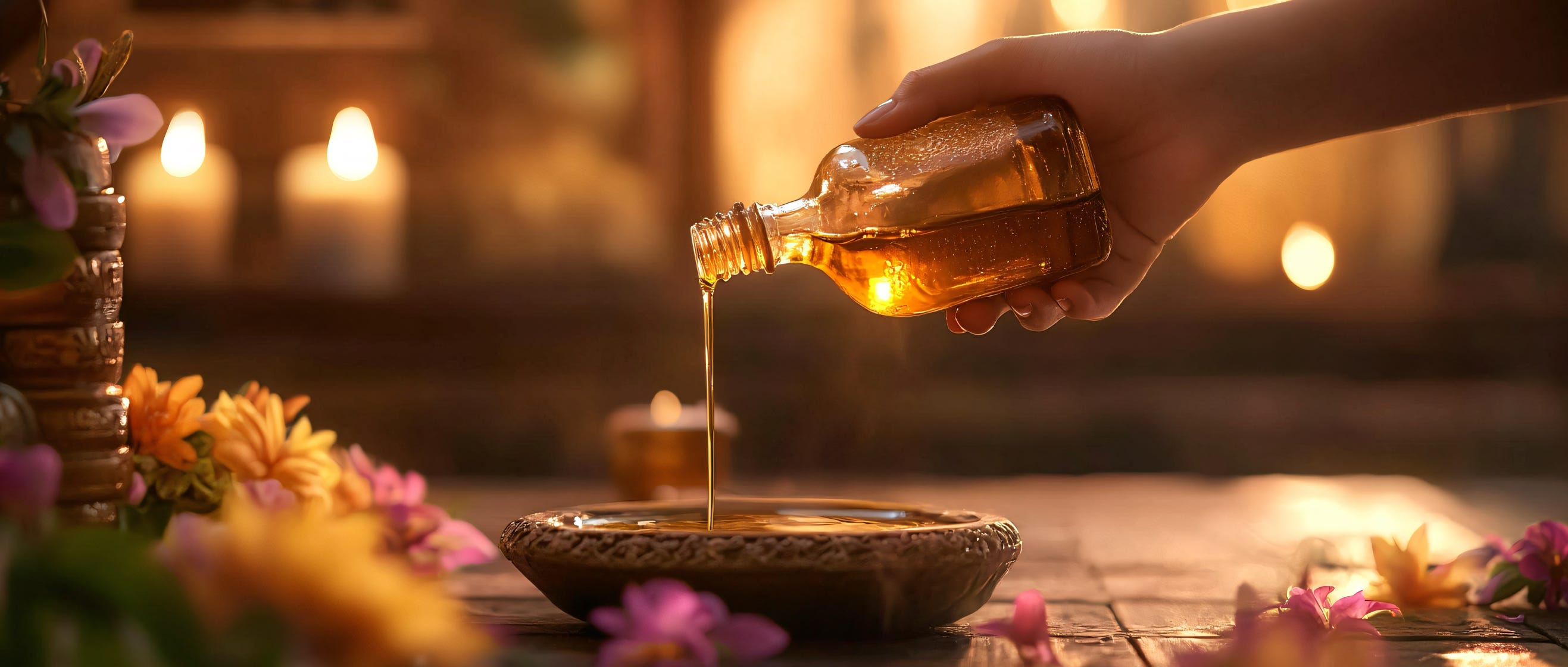
This is why the modern version of these practices doesn’t need to be a perfect replica of their ancient origins to carry meaning. A woman in a Bangalore apartment warming a sesame oil infused with local botanicals before an evening self-massage is not performing historical reconstruction. She is participating in something continuous, a long, unbroken human habit of turning to plants for comfort, for healing, for a moment of deliberate care in the middle of an overwhelming, hurried, increasingly lacklustre world.
This is a different kind of intelligence from the one our culture currently prizes most highly. It is slower, more sensory, and harder to systematise. But it has also proven extraordinarily durable. Ayurvedic oil traditions are five millennia old. The attar makers of Kannauj have been distilling flowers into oil using essentially unchanged methods since the Mughal era. These are not practices that survived because they were fashionable. They survived because they worked.
People today, discovering or rather rediscovering these practices, are not naive. They are not abandoning modern medicine. They are, rather, reaching for something that modern medicine was never designed to provide: a way of communicating, healing, and replenishing the body that feels like attention, that is 100% personal rather than just prevention and intervention.
The oil on your shelf, the botanical salve by your bed, the small evening ritual that has become, quietly, the part of your day you most look forward to, these are not new ideas dressed up in contemporary packaging. They are the oldest known ways. It is not a new trend; it is a return, it is coming home.
Comprehensively articulated. As a naturopath, I value how effectively this piece translates nuanced concepts for a wider audience.
Thank you for those interesting insights into the value of oils and 'fragranced' oils, Marisha. I love essential oils and have a number of them in tiny bottles. I use some of them in my bath water and find it wonderfully refreshing - lavender, pine, patchouli, lime...I think today we go to allopathic medicines which have their place in modern treatments, but we are forgetting that oils play a part in contributing to our physical an mental well being. Thank you again.